
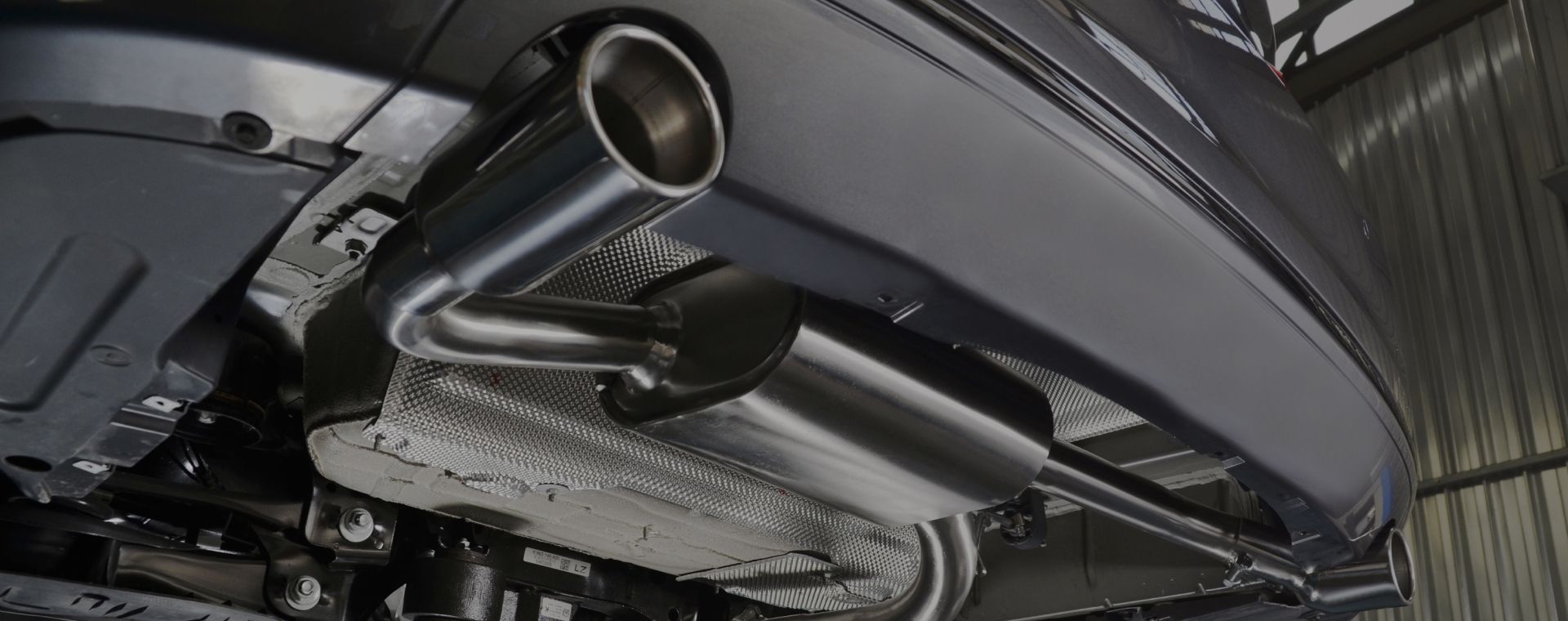
Auto Repair and Exhaust Service for Denville, NJ
Four highways, one river, and a lot of short trips. We know what Denville does to vehicles, because we have been fixing them on US-46 for more than forty years.
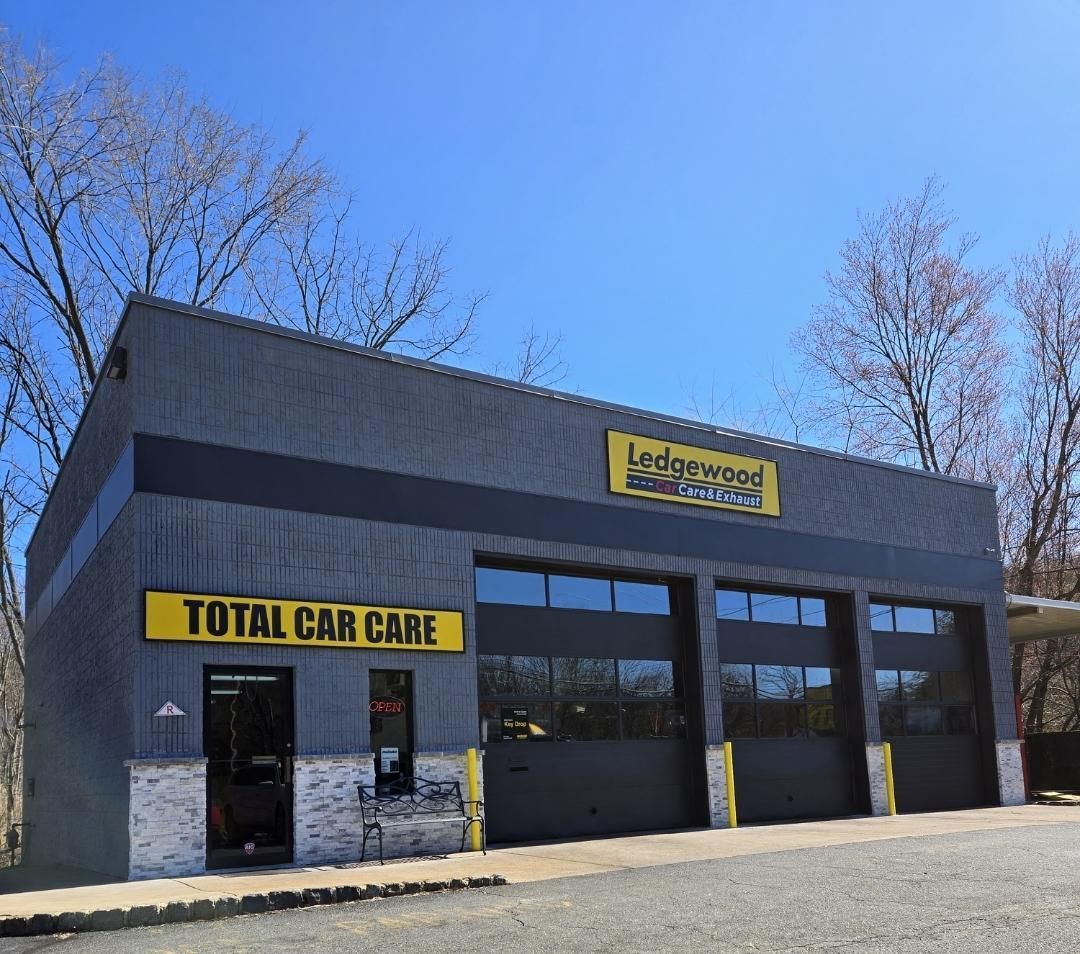
Make an Appointment (973) 620-2003Denville sits where Route 46, Route 10, Route 53 and Interstate 80 all come together, which is how the township earned its nickname as the Hub of Morris County. It is a good place to live and an unusually demanding place to own a car. If you need auto repair in Denville, NJ, Ledgewood Car Care Center & Exhaust is a short run west on US-46 — close enough that you can drop a vehicle off before work and still make your train.
We have worked on cars from Denville since 1981, and the vehicles that come to us from that side of the county tend to arrive with a recognisable set of problems: corroded exhaust, brakes worn down by merge-heavy commuting, and, more often than most towns, electrical faults traceable to water.
Why Denville Is Hard on Exhaust Systems
Our shop has exhaust in its name for a reason, and Denville sends us more of it than most of the towns we serve.
Two things drive that. The first is the Rockaway River corridor, which keeps humidity high in the low-lying parts of town year-round. The second is winter road salt on four heavily treated state and interstate routes inside township limits. Exhaust components fail from the outside in, and constant damp plus chloride is exactly the combination that does it.
What gets hit first, in rough order:
- Muffler shells and end caps, where water sits after short trips
- Resonators and mid-pipe sections along the underbody
- Flex pipe, which cracks once corrosion stiffens it
- Hangers and clamps, which let the system sag and rattle before anything else fails
- Heat shields, usually the first thing a driver actually hears
Why Your Exhaust Suddenly Got Loud
A car that was quiet last month and is loud today has almost always failed at a joint or a hanger rather than the muffler itself. If you are hearing a drone that changes with engine speed, a rattle over the railroad crossings on Diamond Spring Road, or a rasp under acceleration merging onto I-80, the system is open somewhere.
That matters beyond noise. An exhaust leak forward of the oxygen sensor will skew the readings the engine computer relies on, which can push fuel trim off and light the check engine lamp for what looks like an unrelated fault. It is also a safety issue in a vehicle with a hatchback or a worn tailgate seal.
We fix exhaust sectionally where the rest of the system is sound, rather than quoting a full replacement by default. See our exhaust system service page for what that involves.
What the Rockaway River Means for Denville Vehicles
This is the part of Denville car ownership that no generic maintenance advice covers.
The Rockaway River runs straight through the middle of the township, and Denville has a long, documented flood history. On 28 August 2011, Hurricane Irene dropped close to ten inches of rain overnight, the river rose more than sixteen feet above its banks, and four feet of floodwater moved through downtown, damaging 75 businesses and 350 homes. The township's own history page records it. Flooding since then has been serious enough that the U.S. Army Corps of Engineers completed a Flood Risk Management Study for the basin, recommending a roughly $19 million project to raise or floodproof 38 structures — including 28 houses along Riverside Drive and six downtown businesses on Righter Avenue. There is a USGS stream gauge on the Rockaway River at I-80 in Denville specifically because this stretch is watched.
Practically, that means a meaningful number of Denville vehicles have been in water at some point. Not necessarily submerged — often just parked in a lot that took a foot of it, or driven through standing water on a flooded underpass.
If Your Vehicle Has Been in Standing Water
The damage from water is rarely immediate and almost never obvious on the day. It shows up weeks or months later as intermittent electrical faults that are maddening to chase if nobody knows the car got wet.
What we look for after a vehicle has been in floodwater:
- Corrosion at ground points and connector pins, the usual source of intermittent faults
- Water in control modules, many of which sit low in the footwell or under seats
- Moisture in the transmission and differential fluid, which turns it milky
- Brake fluid contamination, since brake fluid pulls in water readily
- Silt in the brake calipers and slide pins
- Fuel tank and filter contamination
- Waterlogged cabin and engine air filters
A car that will not start after being in water should not be repeatedly cranked. If water reached the intake, cranking is what turns a wet engine into a bent connecting rod. Have it towed and inspected first.
If you bought a used car privately in this part of Morris County, a flood history check is worth doing before you spend money on it. Our pre-purchase inspection covers the physical evidence a title search can miss.
Commuting the Hub of Morris County
Four major routes converge inside Denville township limits, and the driving that produces is unusually hard on two systems in particular.
Getting from a Denville neighbourhood onto I-80 or Route 46 usually involves a short, congested merge rather than a long open on-ramp. Repeated heavy braking followed by hard acceleration puts far more heat into the front brakes than steady highway running does.
Merge-Heavy Driving Wears Brakes Early
Heat is what actually kills brakes. It cooks the pad material, warps rotors unevenly, and degrades brake fluid over time. Drivers who commute this way frequently find their front pads and rotors wear noticeably faster than the interval in the owner's manual suggests.
Worth an inspection if you notice a pulsing pedal, a squeal that disappears when you brake harder, a longer pedal than usual, or dust coating one front wheel far more than the other. Details on our brake repair and service page.
Downtown Denville and Short-Trip Driving
The downtown district around Broadway and Diamond Spring Road generates a lot of very short journeys — a few minutes to the shops, a few minutes back. An engine on a trip that short never reaches full operating temperature, so water vapour from combustion condenses in the crankcase instead of burning off.
Over a winter of short trips that produces acidic sludge in the oil. It is the single most common reason a well-maintained-looking car has an engine in worse condition than its mileage suggests. If most of your driving is inside Denville rather than out on the interstate, your oil is working harder than the odometer implies, and a shorter oil change interval is reasonable.
Park-and-Ride Vehicles
Plenty of Denville residents drive a few minutes to the station, leave the car all day, and drive a few minutes home. That is a short-trip pattern combined with long cold soaks, which is hard on batteries in particular. Batteries in that duty cycle rarely give much warning — they crank normally until the first genuinely cold morning, then do not. Testing before winter is cheap insurance.
Auto Repair Services for Denville Drivers
We are a full-service shop, ASE certified, working on most makes and models — American, European, import and exotic. The services Denville vehicles need most often:
Exhaust and Muffler Repair
Sectional repair where possible, full replacement where the system is past saving. Rattles, drone, rasp, corrosion and failed emissions all start here.
Brake Service
Pads, rotors, calipers, hydraulics and fluid condition. We inspect the whole system rather than quoting pads off a noise complaint.
Steering, Suspension and Alignment
Spring in Morris County means potholes, and potholes mean bent control arms, damaged struts and knocked-out alignment. Uneven tyre wear, a pull to one side, or a clunk over bumps all warrant a look.
Electrical and Charging Diagnosis
Particularly relevant here given the flood history. Battery, alternator, starter, grounds and parasitic draw — the whole circuit rather than just swapping the battery.
Engine Diagnostics
A check engine light is a stored code, not a diagnosis. The code tells us which circuit reported a fault, not which component caused it. We test before we replace.
NJ State Inspection Prep
If your vehicle is due and you have a check engine light on, it will fail. We can diagnose and clear the underlying fault beforehand, and confirm the readiness monitors have reset before you go.
Why Denville Drivers Come to Us
We have been on US-46 since 1981, locally owned and operated the whole time.
- ASE certified technicians
- Loaner vehicles available
- After-hours drop-off
- Waiting room with Wi-Fi and TV
- Financing through Synchrony
- Military and senior discounts
- Lifetime warranty
- We will beat any competitor estimate
The loaner and the after-hours drop-off are the two that matter most for Denville customers specifically. If your vehicle is the one that gets you to the station, being without it for a day is not a minor inconvenience.
Getting Here from Denville
Take Route 46 west through Dover and Wharton and continue into Ledgewood. We are at 1365 US-46, on the north side. From the Route 10 side of town, Route 10 west to Route 46 west works equally well. Most Denville addresses are a straightforward drive with no crossing of I-80. Get directions.
Denville Auto Repair Questions We Get Asked
How far is the shop from Denville?
We are on US-46 in Ledgewood, roughly a ten to fifteen minute drive from most Denville addresses depending on where in the township you start and how Route 46 is moving. Customers routinely drop off on the way to work and collect on the way home.
My exhaust suddenly got loud. Is it the muffler?
Often not. A sudden change in noise usually means a joint, flex pipe or hanger has failed rather than the muffler itself, and those are frequently repairable without replacing the whole system. Worth having it looked at before it drops.
My car was in the flooding and seems fine. Should I still have it checked?
Yes. Water damage surfaces late. Corroded grounds and connectors typically produce intermittent electrical faults months or years afterwards, and contaminated brake or differential fluid degrades quietly. An inspection now is considerably cheaper than chasing a phantom electrical fault later.
My car will not start after driving through standing water. What should I do?
Stop cranking it. If water was drawn into the intake, continued cranking is what causes serious internal engine damage. Have the vehicle towed and inspected before any further attempt to start it.
How often should I change my oil if I mostly drive around Denville?
Short-trip driving is harder on oil than highway mileage, because the engine does not get hot enough to boil off condensation. If most of your journeys are a few minutes each, a shorter interval than the manual's normal-service figure is sensible. We will make a recommendation based on your specific vehicle and how you actually use it.
Why do my brakes wear faster than they should?
Merge-heavy commuting onto I-80 and Route 46 puts more heat into the front brakes than steady highway driving. That accelerates pad and rotor wear regardless of how carefully you drive.
Will a check engine light fail my New Jersey state inspection?
Yes. An illuminated check engine light is an automatic failure. Come in beforehand so the fault can be diagnosed and the readiness monitors confirmed reset.
Do you have loaner vehicles?
Yes, subject to availability. Mention it when you book, particularly if you need the car for a commute.
Denville drivers often come to us alongside neighbours in Rockaway, Dover, Randolph and Mount Arlington. Full list on our areas we serve page.
Book Your Denville Service
(973) 620-2003
1365 US-46, Ledgewood, NJ 07852
Monday–Saturday, 8:00 AM – 5:00 PM