
When Do Your Brake Rotors Need to Be Replaced? Essential Signs and Maintenance Guidelines
By Rex Pisan, Ledgewood Car Care Center & Exhaust
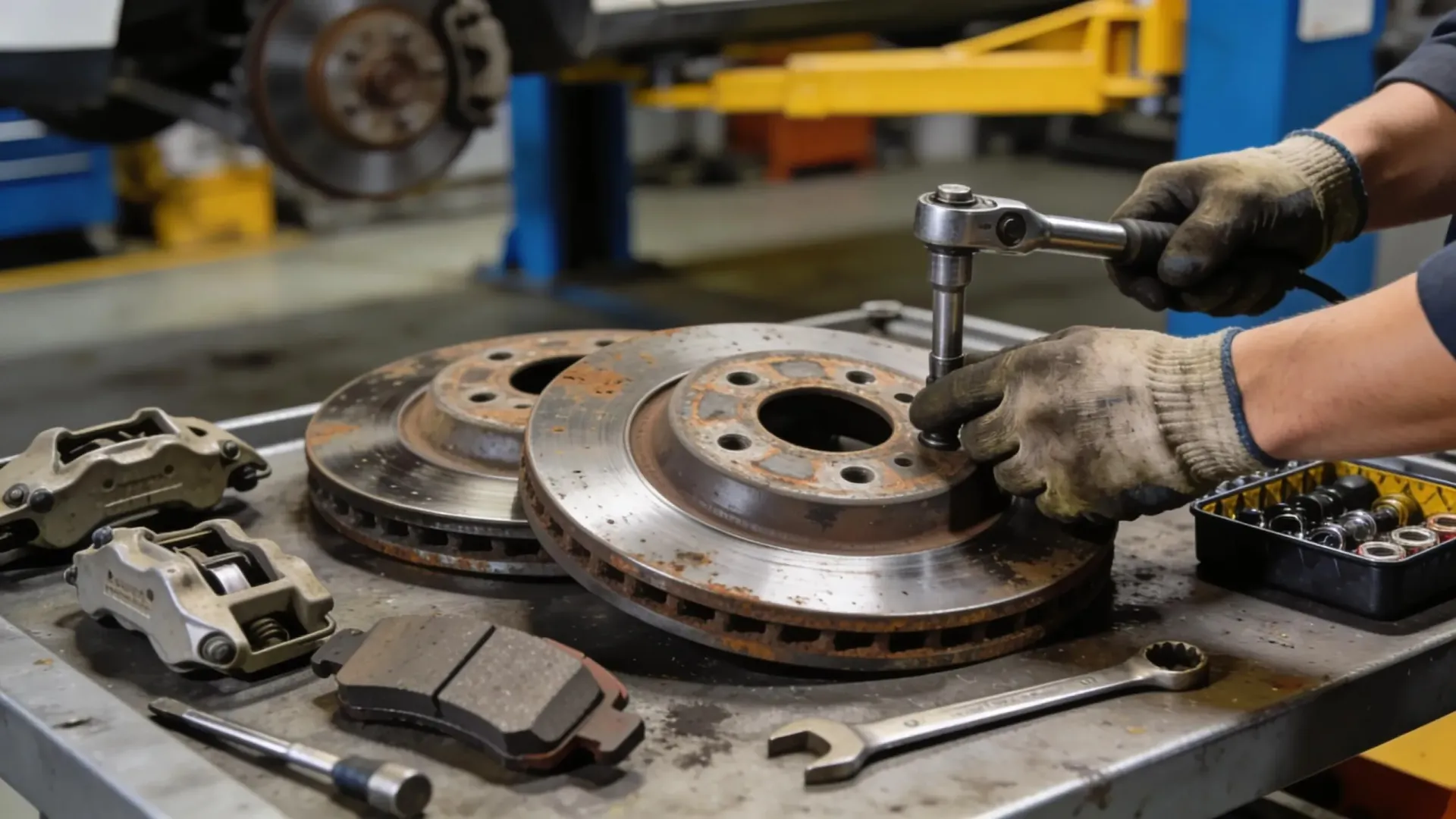
Brake rotors are essential to a vehicle’s braking system, directly influencing safety and stopping performance. Recognising when rotors require replacement helps prevent hazardous conditions. This article describes key indicators of rotor wear, the factors that affect lifespan, and maintenance recommendations. It also identifies common inspection errors and explains what to expect from local replacement services, including Ledgewood Car Care and Exhaust. Staying informed about your brakes supports vehicle safety and longevity.
Key Takeaways
- Brake rotor wear causes vibrations and noises that reduce braking efficiency and compromise vehicle safety.
- Visual signs like scoring, rust, warping, or cracks indicate the need for immediate rotor replacement.
- Driving conditions in Ledgewood, NJ, such as wet weather and frequent stops, accelerate rotor wear.
- Brake rotors should be inspected every 10,000 to 15,000 miles to detect wear early and maintain safety.
- Rotor resurfacing is viable if minimum thickness remains; otherwise, full replacement ensures optimal braking performance.
- Accurate measurement of rotor thickness is critical to avoid unsafe driving conditions and costly repairs.
- Delaying rotor replacement can increase stopping distances and damage other brake components like pads.
- Brake rotors work with pads, calipers, and fluid systems, requiring coordinated maintenance for effective braking.
- Local replacement services in Ledgewood offer thorough inspections and transparent communication about rotor condition and costs.
What Are the Key Signs of Worn Brake Rotors?
Recognising signs of rotor wear is essential to preserve braking performance. Several clear symptoms indicate rotor issues that require prompt attention to avoid more extensive repairs.
How Do Vibrations and Brake Noise Indicate Rotor Wear?
Vibrations and unusual noises, such as grinding or squealing, commonly point to rotor wear. Uneven rotor surfaces create vibrations transmitted through the steering wheel during braking, which reduces braking effectiveness. Noise from the brake assembly also warrants inspection, since pads and rotors should operate with minimal sound.
What Visual Damage Should You Look for on Brake Rotors?
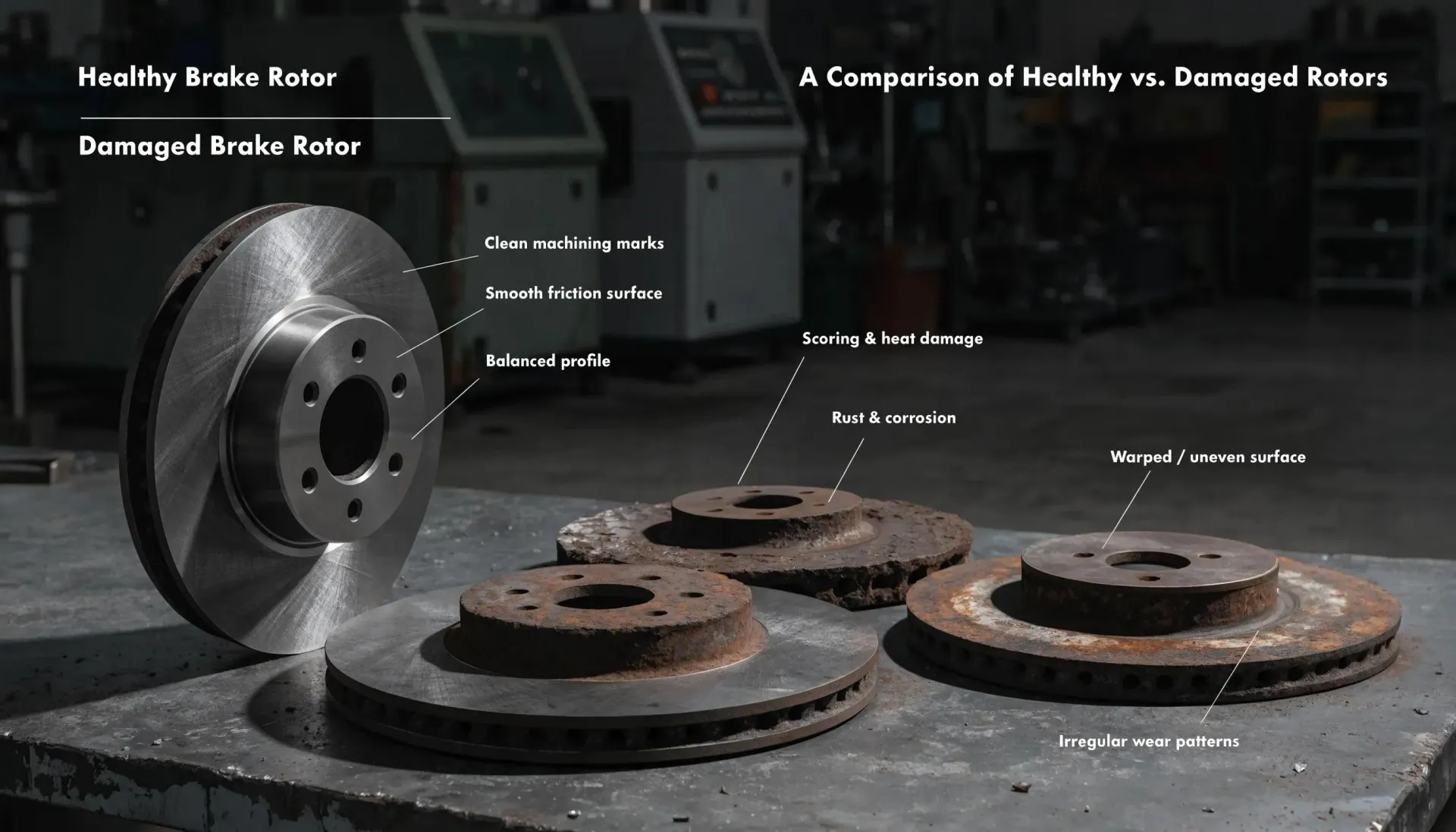
Visual inspection reveals much about rotor condition. Look for deep scoring, surface rust, uneven wear, warping or visible cracks. Any of these signs indicate the rotor may need replacement. Regular checks help detect damage early and maintain safe braking performance.
How Long Do Brake Rotors Typically Last and What Affects Their Lifespan?
Rotor lifespan varies with use and conditions. While many rotors last several years, driving style, load and environment can significantly shorten their service life.
Which Driving Conditions in Ledgewood NJ Impact Rotor Durability?
Local conditions in Ledgewood, NJ, influence rotor wear. Rain, snow and ice increase corrosion and allow debris to abrade rotor surfaces. Frequent stop-and-go driving and heavy loads place additional strain and accelerate wear. Regular inspections will help assess rotor condition in these conditions.
What Is the Recommended Maintenance Schedule for Brake Rotors?
Routine maintenance extends rotor life. Have brakes inspected every 10,000 to 15,000 miles, depending on driving patterns. Regular checks enable early detection of wear and timely resurfacing or replacement. Monitoring brake fluid and pad condition also supports rotor longevity.
Rotor Resurfacing Versus Replacement: How to Choose the Right Option?
When rotors show wear, owners must choose between resurfacing and replacement. Each option has merit; the correct choice depends on remaining material, damage type and safety standards.
When Is Rotor Resurfacing a Safe and Effective Solution?
Resurfacing can be cost-effective if the rotor retains sufficient thickness and only has minor surface imperfections. The process smooths the contact surface to restore braking feel. A professional assessment is necessary to confirm that resurfacing meets safety and thickness requirements.
What Are the Advantages of Brake Rotor Replacement?
Full rotor replacement is the safer option when rotors are excessively worn, warped, or cracked. New rotors restore consistent braking performance and reduce the likelihood of related component wear, which can lower maintenance needs over time.
What Are Common Mistakes to Avoid During Brake Rotor Inspection?
Accurate rotor inspection prevents unsafe conditions and costly follow-up repairs. Avoid common errors to ensure a reliable assessment of rotor condition.
Why Should Minimum Rotor Thickness Be Measured Accurately?
Measuring rotor thickness determines whether a rotor can be resurfaced or must be replaced. Inaccurate measurements can leave a vehicle with unsafe braking. Follow professional measurement procedures and minimum-thickness specifications for safe operation.
How Can Delaying Rotor Replacement Affect Vehicle Safety?
Delaying rotor replacement reduces braking efficiency and increases stopping distances. It can also accelerate wear on brake pads and other components, potentially leading to more expensive repairs. Timely action preserves safety and component life.
What Should You Expect from Local Brake Rotor Replacement Services in Ledgewood NJ?
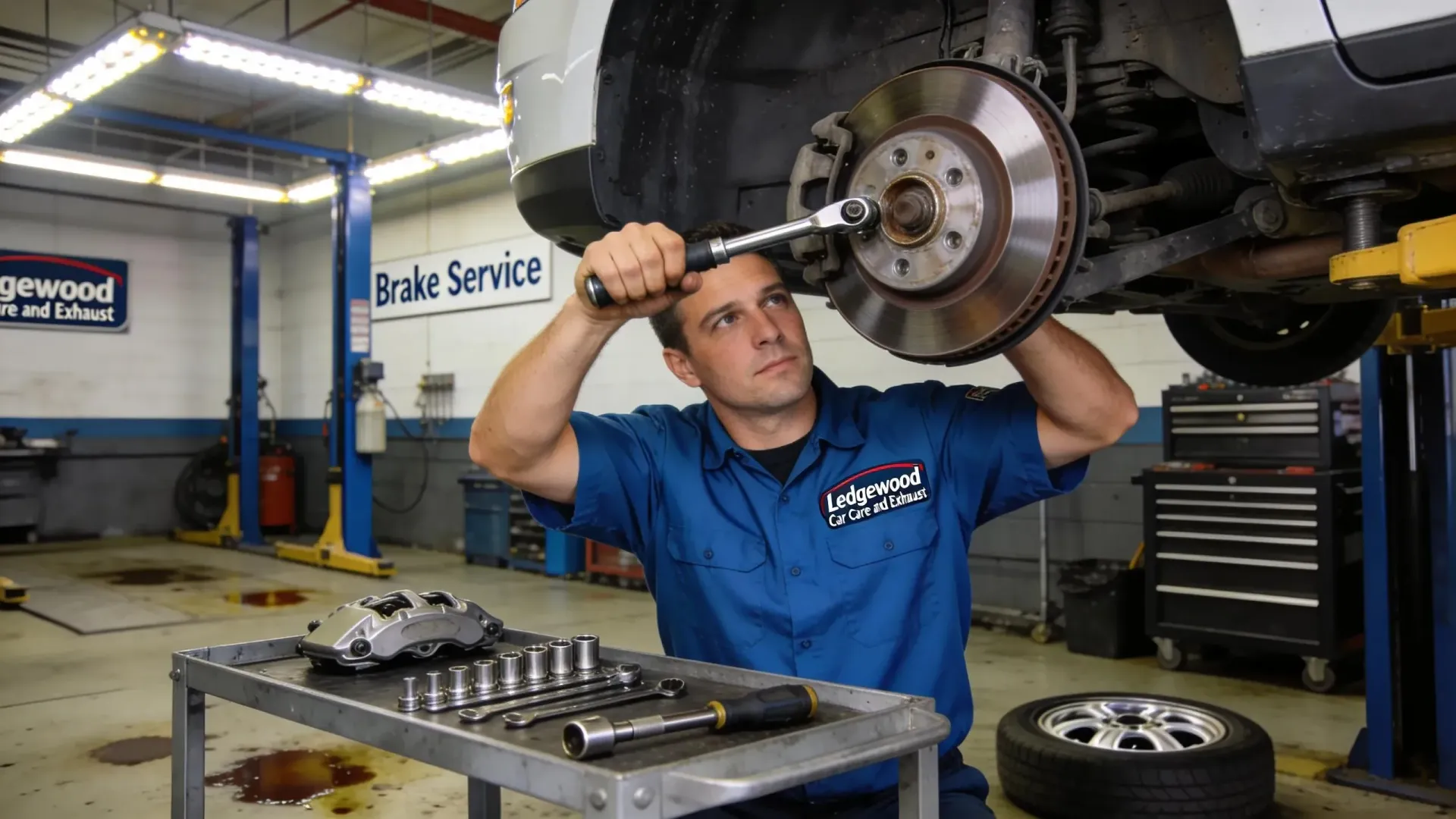
Knowing what to expect during a rotor replacement helps ensure clear communication and correct service. A reliable provider will perform a detailed inspection and explain the findings and recommended work.
How Does Ledgewood Car Care and Exhaust Approach Rotor Inspection and Replacement?
At Ledgewood Car Care and Exhaust, technicians perform a thorough inspection of rotors and related components such as pads and calipers. They identify wear patterns and explain the necessary repairs or replacements clearly, ensuring customers understand the condition of their brakes and the recommended actions.
What Are Typical Brake Rotor Replacement Costs for Local Drivers?
Replacement costs depend on rotor type and vehicle model. Most drivers should expect to pay between $300 and $800 for rotor replacement, including parts and labour. Consult a service provider for an accurate estimate tailored to your vehicle.
How Can You Monitor Brake Rotor Wear Between Professional Inspections?
Proactive monitoring of rotor condition helps maintain braking performance between service visits. Simple checks can reveal early signs of wear that merit professional assessment.
What Practical Tips Help Identify Early Rotor Wear Symptoms?
Regularly check for vibrations, unusual noises and visible wear. Listen for grinding when braking and feel the steering wheel for vibration. Addressing these signs promptly enables earlier intervention and preserves braking performance.
Which Brake System Components Work Together with Rotors?
Rotors function with brake pads, calipers and the
brake fluid system. Ensuring these components operate together correctly is essential for effective braking. Routine inspections should include an assessment of these related parts.
Frequently Asked Questions
1. How Often Should Brake Rotors Be Inspected?
Have brake rotors inspected every 10,000 to 15,000 miles as a general guideline. Regular checks help detect early wear or damage and maintain braking performance. Inspections may be needed more often if you drive in severe weather or in heavy stop-and-go traffic.
2. Can Worn Brake Rotors Affect Other Brake Components?
Yes. Warped or excessively worn rotors cause uneven pad wear, which accelerates pad replacement and can stress calipers and the hydraulic system. Addressing rotor issues promptly prevents further component damage and preserves overall braking efficiency.
3. What Are the Symptoms Indicating Need for Immediate Rotor Replacement?
Immediate replacement is indicated by severe vibrations when braking, deep scoring or visible cracks on the rotor surface. Persistent grinding noises or a marked decline in braking responsiveness also require urgent inspection and likely replacement.
4. How Do Weather Conditions in Ledgewood, NJ, Influence Brake Rotor Longevity?
Rain, snow and ice in Ledgewood, NJ, accelerate rotor wear by promoting corrosion and allowing abrasive debris to collect on braking surfaces. Frequent stop-and-go driving in these conditions adds further stress and speeds up deterioration. Regular maintenance helps mitigate these effects.
5. What Should I Expect During a Brake Rotor Replacement Service?
Expect a detailed inspection of rotors and associated brake components. Technicians will evaluate wear, replace rotors if needed, and often recommend replacing pads at the same time. They should explain their findings and the work performed so you understand the service provided.
6. Is It Safe to Resurface Brake Rotors Instead of Replacing Them?
Resurfacing is safe when rotors meet minimum thickness standards and have only minor surface issues. It restores a smooth contact surface and can extend service life. If rotors are warped, cracked or below minimum thickness, full replacement is the safer option.
7. How Can I Proactively Monitor My Brake Rotors Between Inspections?
Monitor for sensations of vibration, noise during braking and any change in braking responsiveness. Visually inspect rotors for scoring or rust and keep records of checks and maintenance to prompt timely professional evaluations.
Conclusion
Maintaining rotor condition is essential for safe braking and reliable vehicle performance. Recognising wear symptoms and scheduling regular inspections can prevent more costly repairs and preserve safety. Contact Ledgewood Car Care and Exhaust to schedule a brake inspection and confirm the condition of your rotors.